







Infor是一家行业应用软件服务提供商,专注于为物流及供应链、工业制造、汽车以及交通等行业,提供企业资产管理、客户关系管理、企业资源规划、财务管理系统、产品生命周期管理等产品。SCM实现生产、装运、服务、保修和翻新的全面可见性.

Infor SCM
0.00条评价716次浏览
所属厂商:
交付方式:
定价方式:
适用客户规模(/人):
价格区间:
公司介绍:
产品详情
Infor Supply Chain Management (Infor SCM) is a cloud-native, artificial intelligence (AI)-powered end-to-end supply chain management suite designed to help organizations optimize their entire supply chain—from demand planning and inventory management to warehouse operations and transportation logistics. It integrates modular, specialized tools into a unified platform, enabling businesses to enhance visibility, improve efficiency, reduce costs, and build resilience against disruptions. Unlike siloed supply chain solutions, Infor SCM provides a holistic view of the supply network, leveraging real-time data and predictive analytics to drive data-driven decisions.
一、 Core Positioning & Overall Architecture
Infor SCM’s core positioning revolves around four key pillars: cloud-native flexibility, AI-driven intelligence, end-to-end integration, and modular scalability. These pillars ensure that the suite can adapt to the evolving needs of businesses across industries, from small and medium enterprises (SMEs) to large multinational corporations (MNCs).
1.1 Key Design Principles
- Cloud-Native: Built on Infor Operating Service (Infor OS)—a cloud platform that provides a unified foundation for all Infor applications—Infor SCM leverages cloud technologies like microservices, containerization (Kubernetes), and multi-tenancy to deliver elastic scalability, high availability, and reduced IT overhead. This allows organizations to scale their supply chain operations up or down based on demand without investing in on-premises infrastructure.
- AI-Driven: Integrated with Infor Coleman AI, the suite uses machine learning (ML), deep learning, and natural language processing (NLP) to automate repetitive tasks, predict future trends, and provide actionable recommendations. For example, AI-powered demand forecasting models can analyze historical sales data, market trends, and external factors (e.g., weather, promotions) to generate more accurate forecasts than traditional statistical methods.
- End-to-End Integration: Infor SCM seamlessly connects with other Infor solutions (such as Infor ERP, Infor CRM, and Infor PLM) and third-party systems (e.g., SAP, Oracle, Shopify, carrier APIs) via pre-built connectors and open APIs. This integration eliminates data silos and ensures that information flows freely across the entire supply chain, from suppliers to customers.
- Modular Scalability: The suite is composed of specialized modules (e.g., demand planning, WMS, TMS) that can be deployed independently or combined to create a fully integrated solution. This modular approach allows organizations to start with the tools they need and add more modules as their supply chain complexity grows.
1.2 Overall Architecture
Infor SCM’s architecture is layered to ensure separation of concerns and ease of maintenance. The key layers are as follows:
- Cloud Infrastructure Layer: This layer includes the underlying cloud resources (compute, storage, network) provided by Infor’s cloud partners (Amazon Web Services, Microsoft Azure, Google Cloud Platform). It ensures high availability (99.9% uptime) and data redundancy through geographic distribution of data centers.
- Data Foundation Layer: This layer manages all supply chain data, including historical sales data, inventory levels, supplier information, transportation routes, and customer orders. It uses a data lake to store structured and unstructured data, and a data warehouse for structured, aggregated data. The layer also includes data integration tools (ETL/ELT) to ingest data from various sources and ensure data quality.
- AI/ML Engine Layer: Powered by Infor Coleman AI, this layer provides the intelligence behind Infor SCM. It includes pre-trained ML models for demand forecasting, inventory optimization, and route planning, as well as tools for building custom models. The engine uses real-time data to update predictions and recommendations dynamically.
- Core SCM Modules Layer: This is the functional layer of the suite, consisting of modular tools for each supply chain process. Key modules include Demand Management, Supply Planning, Warehouse Management System (WMS), Transportation Management System (TMS), Supply Chain Visibility, and Inventory Optimization.
- Integration Layer: This layer connects Infor SCM with external systems using pre-built connectors, REST APIs, SOAP APIs, EDI, and webhooks. It also includes a middleware component (Infor ION) that enables event-driven integration, ensuring that changes in one system (e.g., a new customer order) trigger actions in other systems (e.g., inventory allocation, transportation scheduling).
- User Experience Layer: This layer provides a modern, intuitive interface for users across roles (supply chain managers, warehouse workers, drivers). It includes role-based dashboards, mobile applications (iOS/Android), and voice-activated tools (for warehouse operations) to enhance productivity and accessibility.
二、 Core Functional Modules
Infor SCM’s core modules cover every stage of the supply chain lifecycle, from demand planning to order fulfillment. Each module is designed to address specific pain points and optimize key processes.
2.1 Demand Management & Planning
Demand Management & Planning is a critical module that helps organizations forecast customer demand accurately, align supply with demand, and minimize stockouts or overstocking. It integrates statistical models, AI algorithms, and collaborative tools to deliver a comprehensive demand planning solution.
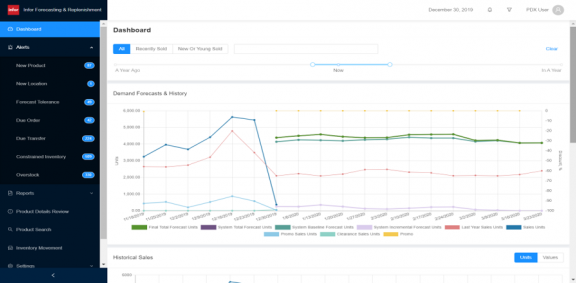
- Demand Forecasting: The module uses a combination of statistical methods (e.g., exponential smoothing, ARIMA) and ML models (e.g., random forests, LSTM networks) to generate forecasts. It considers both internal data (historical sales, promotions, product launches) and external data (weather, economic indicators, social media trends) to improve accuracy. For example, a retail business can use the module to forecast demand for winter clothing based on historical sales data and upcoming weather forecasts.
- Demand Sensing: This feature integrates real-time data from point-of-sale (POS) systems, IoT devices (e.g., shelf sensors), and social media to adjust forecasts dynamically. For instance, if a sudden spike in POS sales for a product is detected, the module automatically updates the forecast to reflect the increased demand, allowing the organization to adjust inventory levels or production schedules accordingly.
- Demand Shaping: The module enables organizations to simulate the impact of various demand-shaping strategies (e.g., promotions, pricing changes, product bundling) on future demand. This helps businesses make informed decisions about which strategies to implement to optimize revenue and profitability. For example, a CPG company can simulate a 10% discount on a product to see how it affects demand and adjust production plans accordingly.
- Consensus Demand Planning: This collaborative tool allows cross-functional teams (sales, marketing, operations) to review and adjust forecasts in real time. It provides a centralized platform for sharing insights and aligning on a single, consensus forecast. This reduces conflicts between teams and ensures that all departments work towards the same supply chain goals.
2.2 Supply Planning & Optimization
Supply Planning & Optimization helps organizations align their supply capacity with forecasted demand, ensuring that products are available when and where they are needed. It uses advanced algorithms to optimize production schedules, inventory levels, and distribution plans.
- Supply Network Planning: This feature models the entire supply network (suppliers, manufacturing facilities, distribution centers, retail stores) to optimize the flow of goods. It considers constraints like production capacity, lead times, transportation costs, and supplier availability to determine the most efficient way to meet demand. For example, a manufacturing company can use this feature to decide whether to produce a product in-house or outsource it to a supplier based on cost and lead time.
- Production Planning & Scheduling: The module provides finite capacity scheduling (FCS) to create realistic production schedules that account for machine capacity, labor availability, and material constraints. It also allows users to run what-if scenarios to evaluate the impact of changes (e.g., machine breakdowns, new orders) on production timelines. For instance, a car manufacturer can simulate a delay in the delivery of engine parts to see how it affects the production schedule and adjust accordingly.
- Inventory Optimization: Using multi-echelon inventory optimization (MEIO) algorithms, the module calculates optimal inventory levels across all stages of the supply chain (raw materials, work-in-progress, finished goods). It balances service levels (e.g., 95% on-time delivery) with inventory costs, reducing excess inventory while ensuring that stockouts are minimized. For example, a retail chain can use this feature to optimize inventory levels across its stores and distribution centers, reducing holding costs by 15% while maintaining high service levels.
- Distribution Requirements Planning (DRP): This feature plans the distribution of finished goods from manufacturing facilities to distribution centers and retail stores. It considers demand forecasts, inventory levels, and transportation constraints to determine the optimal quantity of goods to ship to each location. This helps organizations reduce transportation costs and improve delivery times.
2.3 Warehouse Management System (WMS)
Infor WMS is a cloud-native warehouse management system that optimizes warehouse operations, improves inventory accuracy, and enhances productivity. It supports both traditional and e-commerce warehouses, with features tailored to meet the needs of each.
- Receiving & Putaway: The module automates the receiving process, allowing warehouse workers to scan incoming goods using barcode scanners or RFID tags. It then uses algorithms to determine the optimal storage location (guided putaway) based on factors like product size, weight, and turnover rate. Cross-docking is also supported, enabling goods to be transferred directly from incoming trucks to outgoing trucks without being stored in the warehouse, reducing handling costs and delivery times.
- Storage & Retrieval: This feature optimizes the storage of goods using slotting optimization—assigning products to locations based on their turnover rate (fast-moving products near the shipping area, slow-moving products in the back). It also supports batch/lot tracking and expiration date management, ensuring that products are stored and retrieved in compliance with regulations (e.g., FIFO, LIFO). For example, a pharmaceutical company can use this feature to track the expiration dates of drugs and ensure that they are sold before they expire.
- Picking & Packing: The module offers multiple picking strategies, including wave picking (grouping orders by location), zone picking (assigning workers to specific zones), and voice-directed picking (using voice commands to guide workers). It also automates the packing process, generating packing slips and labels based on order requirements. For e-commerce warehouses, this feature supports kitting (combining multiple products into a single package) and gift wrapping.
- Shipping & Yard Management: The module optimizes the shipping process by scheduling carriers, generating bills of lading, and tracking shipments in real time. Yard management features include assigning parking spots to trucks, tracking the status of incoming/outgoing shipments, and optimizing the flow of trucks in the yard to reduce waiting times. For example, a logistics company can use this feature to schedule carriers based on delivery deadlines and transportation costs.
- Inventory Accuracy: The module ensures inventory accuracy through cycle counting (regularly counting a subset of inventory) and RFID integration. It also provides real-time visibility into inventory levels, allowing warehouse managers to quickly identify and resolve discrepancies. For instance, if a cycle count reveals a shortage of a product, the module alerts the manager and suggests possible causes (e.g., misplacement, theft).
2.4 Transportation Management System (TMS)
Infor TMS is a cloud-native transportation management system that optimizes the planning, execution, and monitoring of transportation operations. It helps organizations reduce transportation costs, improve delivery times, and enhance customer satisfaction.
- Route Optimization: The module uses AI algorithms to optimize routes for multi-stop deliveries, considering factors like traffic conditions, delivery deadlines, and vehicle capacity. It also supports mode selection (e.g., road, rail, air) based on cost and delivery time. For example, a delivery company can use this feature to optimize routes for its fleet, reducing fuel costs by 10% and delivery times by 15%.
- Carrier Management: This feature helps organizations manage their carrier relationships, including rate shopping (comparing rates from multiple carriers), contract management, and performance tracking. It provides a centralized platform for storing carrier information and evaluating their performance based on metrics like on-time delivery, cost, and service quality. For instance, a retail company can use this feature to select the most cost-effective carrier for a shipment based on delivery deadlines.
- Shipment Execution: The module automates the shipment execution process, including booking carriers, generating shipping documents (e.g., bills of lading), and tracking shipments in real time. It integrates with carrier APIs to provide real-time updates on shipment status, allowing organizations to keep customers informed about delivery times. For example, an e-commerce company can use this feature to send customers real-time tracking updates via email or SMS.
- Freight Audit & Payment: This feature automates the audit and payment of freight invoices, reducing manual errors and ensuring that organizations pay the correct amount. It compares invoices against contracts and shipment data to identify discrepancies (e.g., overcharging) and resolves them automatically. For instance, if a carrier invoices for a higher rate than the contract allows, the module alerts the finance team and suggests a correction.
- Global Trade Management: The module helps organizations comply with global trade regulations, including tariff calculation, customs documentation, and export/import compliance checks. It integrates with government databases to ensure that shipments meet all regulatory requirements. For example, a manufacturing company exporting goods to the EU can use this feature to calculate the correct tariffs and generate the necessary customs documents.
2.5 Supply Chain Visibility & Control Tower
The Supply Chain Visibility & Control Tower module provides real-time visibility into the entire supply chain, enabling organizations to monitor operations, identify disruptions, and take corrective actions quickly.
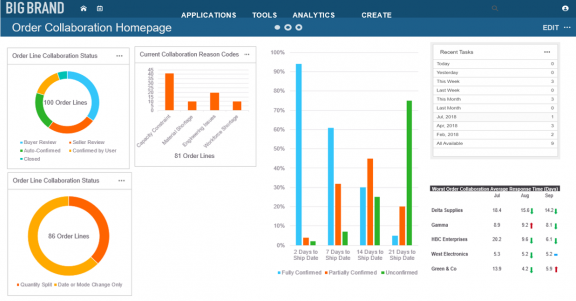
- Real-Time Visibility: The module integrates data from all supply chain systems (WMS, TMS, ERP) and external sources (e.g., carrier APIs, IoT devices) to provide a single, unified view of the supply chain. It displays key metrics like inventory levels, shipment status, and production progress on a dashboard, allowing managers to quickly assess the health of the supply chain.
- Alerting & Exception Management: This feature generates proactive alerts for potential disruptions (e.g., delayed shipments, stockouts, machine breakdowns). Alerts are sent via email, SMS, or in-app notifications, and include recommendations for resolving the issue. For example, if a shipment is delayed due to a traffic jam, the module alerts the logistics manager and suggests alternative routes.
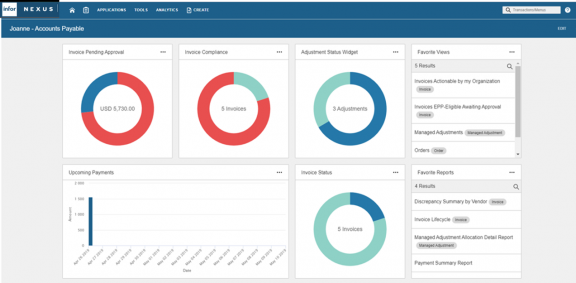
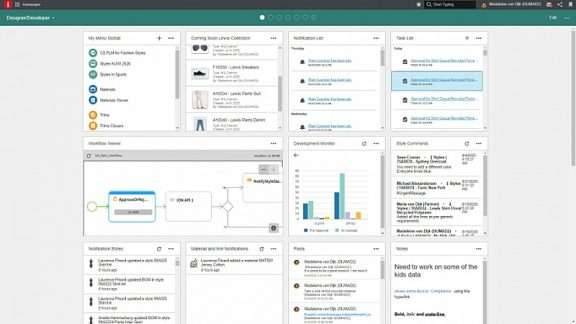
- Dashboards & Analytics: The module provides customizable, role-based dashboards for different users (supply chain managers, warehouse workers, drivers). It includes advanced analytics tools, such as pivot tables and heatmaps, to help users analyze data and identify trends. For instance, a supply chain manager can use the dashboard to track on-time delivery rates across all carriers and identify underperforming ones.
- What-If Simulation: This feature allows users to simulate the impact of potential disruptions (e.g., port closures, supplier delays) on the supply chain. It helps organizations develop contingency plans to mitigate risks. For example, a manufacturing company can simulate a delay in the delivery of raw materials to see how it affects production and adjust the production schedule accordingly.
2.6 Supplier Relationship Management (SRM)
Supplier Relationship Management helps organizations manage their relationships with suppliers, ensuring that they receive high-quality goods and services at competitive prices.
- Supplier Onboarding & Qualification: The module streamlines the supplier onboarding process, including collecting supplier information, conducting background checks, and evaluating their compliance with regulatory requirements. It also uses AI to assess supplier risk (e.g., financial stability, geopolitical risk) and qualify suppliers based on predefined criteria.
- Procurement Planning: This feature helps organizations plan their procurement activities, including strategic sourcing (identifying potential suppliers) and purchase order management. It integrates with demand forecasts to ensure that the right quantity of materials is ordered at the right time. For example, a manufacturing company can use this feature to order raw materials based on production schedules.
- Supplier Performance Monitoring: The module tracks supplier performance using metrics like on-time delivery (OTD), quality (defect rate), and cost. It generates performance reports and alerts managers to underperforming suppliers. For instance, if a supplier’s OTD rate drops below 90%, the module alerts the procurement manager and suggests corrective actions (e.g., renegotiating the contract).
- Collaborative Planning: This feature enables collaboration between organizations and their suppliers using CPFR (Collaborative Planning, Forecasting & Replenishment) principles. It allows suppliers to access demand forecasts and adjust their production schedules accordingly, reducing lead times and improving supply chain efficiency. For example, a retail company can share its demand forecast with a supplier to ensure that the supplier produces the right quantity of goods.
2.7 Inventory Management & Optimization
Inventory Management & Optimization helps organizations reduce inventory costs while maintaining high service levels. It uses advanced algorithms to optimize inventory levels across all stages of the supply chain.
- Multi-Echelon Inventory Optimization (MEIO): This feature optimizes inventory levels across multiple echelons (e.g., raw materials, work-in-progress, finished goods) to minimize holding costs and stockouts. It considers factors like demand variability, lead time variability, and service level targets to calculate the optimal inventory levels for each echelon. For example, a consumer electronics company can use this feature to optimize inventory levels for its components, finished products, and spare parts.
- Safety Stock Optimization: The module calculates safety stock levels based on the desired service level and the variability of demand and lead times. It uses statistical methods (e.g., standard deviation) and AI algorithms to adjust safety stock levels dynamically. For instance, if demand variability increases due to a promotion, the module automatically increases the safety stock level to avoid stockouts.
- Obsolete Inventory Management: This feature identifies obsolete or slow-moving inventory and suggests disposition strategies (e.g., discounting, recycling, donating). It helps organizations reduce holding costs and free up warehouse space. For example, a fashion retailer can use this feature to identify last season’s clothing and discount it to clear inventory.
- Stock Allocation: The module prioritizes stock allocation based on customer importance, profitability, and delivery deadlines. It ensures that high-priority customers receive their orders first, even during stock shortages. For instance, a B2B company can use this feature to allocate stock to its top 10 customers before fulfilling orders from other customers.
2.8 Supply Chain Execution (SCE)
Supply Chain Execution integrates warehouse and transportation operations to ensure that products are delivered to customers on time and in good condition. It automates the execution of supply chain processes, reducing manual errors and improving efficiency.
- Shop Floor Execution: This feature integrates with manufacturing execution systems (MES) to track production progress in real time. It provides shop floor workers with real-time instructions and updates, ensuring that production runs smoothly. For example, a food processing company can use this feature to track the production of a batch of products from raw materials to finished goods.
- Logistics Execution: The module integrates warehouse and transportation operations to optimize the flow of goods from the warehouse to the customer. It automates the process of picking, packing, and shipping orders, reducing delivery times and improving customer satisfaction. For instance, an e-commerce company can use this feature to ensure that orders are picked, packed, and shipped within 24 hours of being placed.
- Order Fulfillment: This feature manages the entire order fulfillment process, from customer order placement to delivery. It integrates with CRM systems to track customer orders and provide real-time updates. For example, a retail company can use this feature to track an order from the time it is placed online to the time it is delivered to the customer’s door.
三、 Technical Features & Advantages
Infor SCM’s technical features and advantages set it apart from traditional supply chain solutions, enabling organizations to achieve greater efficiency, agility, and resilience.
- Cloud-Native & Scalable: Built on Infor OS, Infor SCM leverages cloud technologies to deliver elastic scalability. Organizations can scale their operations up or down based on demand, without investing in on-premises infrastructure. The multi-tenancy architecture ensures that resources are shared efficiently, reducing costs.
- AI-Powered Intelligence: Infor Coleman AI integrates with all modules to provide predictive analytics, automation, and recommendations. For example, AI-driven demand forecasting reduces forecast error by up to 30% compared to traditional methods, while AI-powered route optimization reduces transportation costs by up to 15%.
- Seamless Integration: Infor SCM integrates with other Infor solutions and third-party systems via pre-built connectors and open APIs. This eliminates data silos and ensures that information flows freely across the supply chain. The integration layer also supports event-driven workflows, enabling real-time responses to changes in the supply chain.
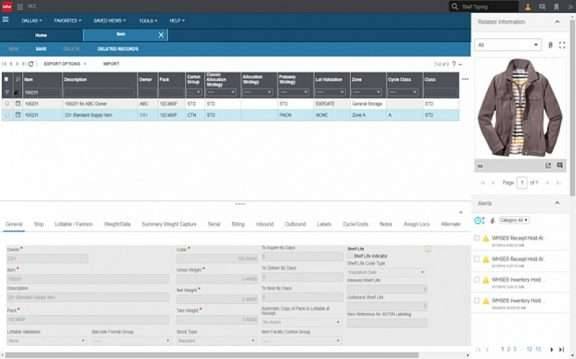
- Modern User Experience: The suite features a modern, intuitive UI (Infor Ming.le) with role-based dashboards and mobile applications. This enhances user productivity and accessibility, allowing warehouse workers and drivers to access the system from anywhere using their mobile devices.
- Security & Compliance: Infor SCM adheres to strict security standards, including ISO 27001, GDPR, and SOC 2. It uses data encryption (at rest and in transit), access control (RBAC), and audit trails to protect sensitive data. This ensures that organizations comply with regulatory requirements and protect their supply chain data.
- Real-Time Data Processing: The suite uses in-memory computing and real-time data ingestion to process data quickly and provide up-to-date insights. This enables organizations to respond to disruptions in real time and make data-driven decisions.
四、 Typical Application Scenarios
Infor SCM is used across a wide range of industries to solve various supply chain challenges. Below are some typical application scenarios:
- Retail & E-Commerce: Retailers use Infor SCM to optimize demand forecasting for seasonal products, manage inventory across stores and distribution centers, and improve last-mile delivery. For example, a large retail chain uses Infor WMS to automate warehouse operations and Infor TMS to optimize delivery routes, reducing delivery times by 20%.
- Manufacturing: Manufacturers use Infor SCM to align production schedules with demand forecasts, optimize inventory levels, and manage supplier relationships. For instance, an automotive manufacturer uses Infor Supply Planning to optimize production schedules and reduce lead times by 15%.
- Consumer Packaged Goods (CPG): CPG companies use Infor SCM to sense demand from POS data, manage cross-docking operations, and comply with global trade regulations. For example, a food and beverage company uses Infor Demand Sensing to adjust forecasts based on real-time POS data, reducing stockouts by 25%.
- Logistics & Distribution: Logistics companies use Infor SCM to optimize route planning, manage carrier relationships, and improve freight audit and payment processes. For instance, a third-party logistics (3PL) provider uses Infor TMS to optimize routes for its fleet, reducing fuel costs by 12%.
- Healthcare: Healthcare organizations use Infor SCM to manage inventory of pharmaceuticals and medical devices, ensure cold chain compliance, and improve supply chain visibility. For example, a hospital uses Infor WMS to track the expiration dates of drugs and Infor Supply Chain Visibility to monitor the delivery of medical devices.
五、 Summary
Infor Supply Chain Management (Infor SCM) is a comprehensive, cloud-native suite that helps organizations optimize their entire supply chain—from demand planning to order fulfillment. It leverages AI, cloud technologies, and end-to-end integration to deliver visibility, efficiency, and resilience. The modular design allows organizations to adapt the suite to their specific needs, while the cloud-native architecture ensures scalability and reduced IT overhead. With its advanced features and industry-specific solutions, Infor SCM is an ideal choice for businesses looking to transform their supply chain operations and gain a competitive edge.
To learn more about Infor SCM, visit the official website:
登录后查看
展开更多
案例介绍
暂无内容
版权/专利
暂无内容
评价

"客观"-"真实"-"中立"-"专业"点评,每项不少于20字,总字数不少于90字,帮助更多迷茫的IT人。点评完即可现金抽奖,满5个送笔记本/平板活动支架;10个送扫地机器人;20个送VIP视频会员。
评分标准及明细
0-20分
很糟糕功能/性能/服务等基本无法使用
20-40分
较差功能/性能/服务等存在较多问题
40-60分
一般行业同类平均水平,凑活够用
60-80分
还不错行业上游水平,能满足大部分使用需求
80-100分
优秀行业领先水平,只有20%左右评比对象满足这个标准
总评分
0.0分项目
评分
同类平均分
综合
0
0
兼容性
0
0
稳定性
0
0
易用性
0
0
性能
0
0
市场占有率
0
0
功能
0
0
扩展性
0
0
美观度
0
0
技术服务
0
0
性价比
0
0
时间排序↓
最新
精华
0 条评论

向我咨询

发表评论