








KubeSphere 是在目前主流容器调度平台 Kubernetes 之上构建的企业级分布式多租户容器平台,提供简单易用的操作界面以及向导式操作方式,在降低用户使用容器调度平台学习成本的同时,极大减轻开发、测试、运维的日常工作的复杂度,旨在解决 Kubernetes 本身存在的存储、网络、安全问题

K8S
77.09条评价776次浏览
所属厂商:
交付方式:
定价方式:
适用客户规模(/人):
价格区间:
公司介绍:
产品详情
KubeSphere Container Platform is an enterprise-grade, full-stack Kubernetes platform designed to simplify the management of containerized applications and their entire lifecycle. It provides a unified, intuitive interface for users to handle cluster operations, workload deployment, microservices governance, DevOps automation, monitoring, and security—all without requiring deep expertise in Kubernetes. As a CNCF-certified Kubernetes distribution, KubeSphere is compatible with all standard Kubernetes clusters and supports multi-cloud, multi-cluster, and edge computing scenarios, making it a versatile choice for enterprises of all sizes.
一、 Core Positioning & Overall Architecture
KubeSphere's core positioning lies in being an enterprise-centric, full-stack Kubernetes platform that bridges the gap between Kubernetes' powerful capabilities and user-friendly operations. It aims to reduce the complexity of Kubernetes adoption for enterprises, enabling them to focus on application development rather than infrastructure management.
1. Core Positioning
- Enterprise-Grade: Built with security, reliability, scalability, and compliance in mind, KubeSphere meets the strict requirements of industries like finance, government, manufacturing, and healthcare.
- Full-Stack: Covers the entire Kubernetes ecosystem, from infrastructure orchestration to application delivery, microservices governance, and operation & maintenance.
- Multi-Cloud & Multi-Cluster: Supports centralized management of Kubernetes clusters across public clouds (AWS, Azure, Alibaba Cloud), private clouds, and on-premises data centers.
- User-Friendly: Provides a web-based UI with visual operations, reducing the learning curve for Kubernetes and enabling teams to get started quickly.
2. Key Design Principles
- Abstraction of Complexity: Hides the low-level details of Kubernetes (like YAML configurations) behind intuitive UI components, making operations accessible to non-experts.
- Extensibility: Supports a plugin system that allows users to add or remove features based on their needs, such as service mesh, DevOps, or edge computing.
- Compatibility: Compliant with CNCF Kubernetes standards, ensuring compatibility with all Kubernetes distributions and ecosystem tools.
- Isolation & Security: Implements multi-tenant isolation and end-to-end security measures to protect sensitive data and resources.
3. Logical Architecture Layers
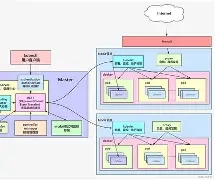
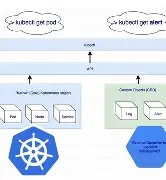
KubeSphere's architecture is layered to ensure modularity and flexibility, consisting of the following six core layers:
- Infrastructure Layer: The foundation of KubeSphere, supporting various infrastructure types including public clouds (AWS EC2, Azure VM, Alibaba Cloud ECS), private clouds (OpenStack, VMware vSphere), and bare-metal servers. It provides the necessary compute, storage, and network resources for Kubernetes clusters.
- Kubernetes Core Layer: Based on the latest stable Kubernetes version, enhanced with high availability (HA) configurations (e.g., multi-master nodes with etcd clustering), cluster scaling, and performance optimizations. This layer is compatible with all standard Kubernetes distributions.
- KubeSphere Platform Layer: The core functional layer of KubeSphere, including modules like multi-cluster management, workload management, image management, network management, and storage management. These modules abstract Kubernetes APIs into user-friendly operations.
- Application & Service Layer: Focuses on application delivery and governance, including microservices governance (via Istio), DevOps pipelines (via Jenkins/Tekton), application store (Helm charts), and edge computing management. This layer enables enterprises to build, deploy, and manage applications efficiently.
- Observability & O&M Layer: Provides comprehensive monitoring (Prometheus), logging (Elasticsearch/Loki), tracing (Jaeger), and alerting capabilities. It also includes O&M tools like backup & restore (Velero), resource analysis, and event management.
- Security & Compliance Layer: Ensures the security of the entire platform, including RBAC-based access control, multi-tenant isolation, secret management (HashiCorp Vault), image vulnerability scanning, network policies, and compliance checks (CIS Benchmark).
二、 Core Function Modules
1. Multi-Cluster & Multi-Cloud Management
KubeSphere's multi-cluster management module enables enterprises to centrally manage Kubernetes clusters across different environments, breaking down silos and improving operational efficiency.
- Cluster Registration & Import: Supports importing existing Kubernetes clusters (from any cloud or on-prem) into KubeSphere via a few simple steps. The imported clusters retain their independence but can be managed centrally.
- Cluster Federation: Enables workload scheduling across multiple clusters, such as deploying applications to clusters in different regions for high availability or disaster recovery. It also supports cross-cluster service discovery and load balancing.
- Unified Cluster Monitoring: Provides a unified dashboard to view the status of all managed clusters, including cluster health, resource usage (CPU, memory, storage), and node count. Users can drill down into individual clusters for detailed metrics.
- Cross-Cluster Workload Management: Allows users to deploy, scale, and update workloads across multiple clusters from a single interface. It supports workload distribution strategies like "spread across clusters" or "deploy to specific clusters."
- Multi-Cloud Cost Management: Integrates with cloud service providers to track and analyze the cost of resources across multi-cloud clusters, helping enterprises optimize their cloud spending.
2. Workload Lifecycle Management
This module simplifies the entire lifecycle of Kubernetes workloads, from deployment to scaling and decommissioning.
- Deployment Management:
- Visual deployment creation: Users can specify replicas, container images, resource limits (CPU/memory), health checks (liveness/readiness probes), and environment variables via the UI.
- Rolling updates & rollbacks: Supports rolling updates with configurable max unavailable and max surge settings. If an update fails, users can roll back to the previous version with one click.
- Workload health monitoring: Displays real-time status of deployments, including pod count, running status, and error events.
- StatefulSet Management:
- Stable network identities: Assigns fixed hostnames and IP addresses to stateful pods, which is critical for applications like databases (e.g., MySQL, PostgreSQL).
- Persistent storage: Automatically provisions persistent volumes (PVs) for each stateful pod, ensuring data persistence even if the pod is restarted or moved.
- Ordered operations: Supports ordered deployment (from pod 0 to N) and scaling (up or down in order), which is essential for stateful applications.
- DaemonSet Management:
- Deploy to all or selected nodes: Allows users to deploy pods to every node in the cluster or a subset of nodes (via node selectors or taints/tolerations).
- Use cases: Ideal for running monitoring agents (e.g., Prometheus Node Exporter), log collectors (e.g., Fluentd), or network plugins (e.g., Calico).
- Update strategies: Supports rolling updates and on-demand updates for DaemonSets.
- Job & CronJob Management:
- Job: One-time tasks that run to completion (e.g., data migration, batch processing). Users can specify the number of completions and parallelism.
- CronJob: Scheduled tasks that run at specified intervals (using cron expressions). Common use cases include backup jobs, report generation, and cleanup tasks.
- Log viewing: Allows users to view the logs of job/cronjob pods to verify task execution.
- Auto-Scaling:
- Horizontal Pod Autoscaler (HPA): Automatically scales the number of pod replicas based on CPU/memory usage or custom metrics (e.g., request count).
- Vertical Pod Autoscaler (VPA): Adjusts the CPU/memory limits of pods based on actual usage, optimizing resource allocation.
- Cluster Autoscaler: Automatically adds or removes nodes in the cluster based on workload demand, ensuring sufficient resources are available.
3. Container Image & Registry Management
This module ensures the security and availability of container images used in the platform.
- Image Registry Integration: Supports integration with popular image registries like Harbor, Docker Hub, AWS ECR, Azure ACR, and Alibaba Cloud ACR. Users can pull images from these registries or push their own images to private registries.
- Image Vulnerability Scanning: Integrates with tools like Trivy to scan images for CVE vulnerabilities before deployment. Users can set policies to block images with high-severity vulnerabilities or warn about medium-severity issues.
- Image Policy Enforcement: Defines rules to control which images can be deployed in the cluster (e.g., only allow images from trusted registries, or images with specific tags).
- Image Cache: Caches frequently used images in the cluster to reduce download time and improve deployment speed, especially in environments with limited network bandwidth.
4. Network & Storage Orchestration
KubeSphere provides comprehensive network and storage management capabilities to support diverse application requirements.
- Network Management:
- Network Plugins: Supports popular network plugins like Calico, Cilium, Flannel, and Weave Net. Users can choose the plugin that best fits their needs (e.g., Cilium for advanced network policies and observability).
- Network Policies: Allows users to define rules to control traffic between pods, namespaces, or external IPs. For example, users can block traffic from a specific namespace to a sensitive service.
- Load Balancing: Integrates with cloud load balancers (e.g., AWS ELB, Azure Load Balancer) or on-prem load balancers (e.g., MetalLB) to expose services to external users.
- Ingress Controller: Supports NGINX Ingress Controller to manage HTTP/HTTPS traffic to services, including path-based routing, SSL termination, and rewrite rules.
- Storage Management:
- Storage Classes: Provides pre-configured storage classes for different storage types (e.g., local storage, cloud storage like AWS EBS, Azure Disk, or distributed storage like Ceph RBD).
- Persistent Volumes (PV) & Claims (PVC): Allows users to request persistent storage for their applications via PVCs, which are dynamically bound to PVs by the storage class.
- CSI Driver Support: Compatible with all standard CSI (Container Storage Interface) drivers, enabling users to use any storage system that supports CSI.
- Storage Snapshots: Supports volume snapshots for backup and recovery purposes. Users can create snapshots of PVs and restore them to new volumes if needed.
5. Microservices Governance with Service Mesh
KubeSphere integrates with Istio to provide advanced microservices governance capabilities.
- Service Mesh Installation: One-click installation of Istio in the cluster, with pre-configured settings for common use cases.
- Traffic Management:
- Canary Release: Gradually roll out new versions of services to a subset of users to minimize risk.
- Blue-Green Deployment: Deploy two identical environments (blue and green) and switch traffic between them once the new version is verified.
- Circuit Breaking: Prevents cascading failures by limiting the number of requests to a service that is experiencing issues.
- Rate Limiting: Controls the number of requests to a service to prevent overload.
- Service Observability: Provides detailed metrics for services (e.g., request rate, latency, error rate), distributed tracing to track request flows across services, and logging for service interactions.
- Security: Enables mTLS (mutual TLS) between services to encrypt traffic and authenticate service identities.
6. End-to-End DevOps Pipeline
KubeSphere's DevOps module automates the software delivery process from code to deployment.
- Pipeline Creation:
- Visual Editor: Drag-and-drop interface to create pipelines with stages like code checkout, build, test, package, and deploy.
- YAML Editor: Supports writing pipeline definitions in YAML for advanced users.
- Integration with Code Repositories: Connects to GitLab, GitHub, Bitbucket, or Gitee to pull code for the pipeline.
- Pipeline Execution:
- Real-Time Monitoring: Displays the progress of each stage in the pipeline, with logs for each step.
- Retry & Rollback: Allows users to retry failed stages or roll back to a previous version if the deployment fails.
- Webhook Integration: Triggers pipelines automatically on code push or merge requests.
- Artifact Management: Integrates with Nexus or JFrog Artifactory to store build artifacts (e.g., JAR files, Docker images).
- Test Integration: Supports automated testing tools like JUnit, Selenium, or SonarQube to ensure code quality.
7. Comprehensive Monitoring & Observability
KubeSphere provides a unified observability platform to monitor the health and performance of clusters, nodes, and applications.
- Metrics Collection: Uses Prometheus to collect metrics from clusters, nodes, pods, services, and applications. It provides built-in dashboards for:
- Cluster Overview: CPU, memory, disk, and network usage across the cluster.
- Node Details: Resource usage per node, including CPU, memory, disk I/O, and network traffic.
- Pod Details: Resource usage per pod, and status (running, pending, failed).
- Service Metrics: Request rate, latency, and error rate for services.
- Logging Management:
- Log Collection: Collects logs from pods, nodes, and containers using Fluentd or Loki.
- Log Search: Allows users to search logs by keyword, time range, pod name, namespace, or container name.
- Log Visualization: Integrates with Elasticsearch Kibana or Grafana to visualize logs and create custom dashboards.
- Distributed Tracing: Uses Jaeger to track request flows across microservices. Users can view the path of a request, the duration of each step, and any errors encountered.
- Alerting System:
- Alert Rules: Users can set up rules for various events (e.g., node CPU usage > 80% for 5 minutes, pod failure).
- Notification Channels: Sends alerts via email, Slack, Webhook, or SMS to notify relevant teams.
- Alert History: Stores all alert events for auditing and analysis.
8. Enterprise-Grade Security & Compliance
KubeSphere prioritizes security and compliance to protect enterprise data and resources.
- RBAC Access Control:
- Roles & Role Bindings: Creates roles with specific permissions (e.g., view pods, edit deployments) and binds them to users or groups at the cluster or namespace level.
- Multi-Tenant Isolation: Each tenant has its own namespaces, and resources are isolated between tenants to prevent unauthorized access.
- User Management: Supports LDAP/AD integration to sync users from enterprise directories, as well as local user creation.
- Secret Management:
- Secrets: Stores sensitive data (e.g., passwords, API keys) as encrypted secrets, which can be mounted to pods as environment variables or volumes.
- HashiCorp Vault Integration: Integrates with Vault to manage secrets centrally, providing advanced features like secret rotation and access control.
- Image Security: As mentioned earlier, scans images for vulnerabilities and enforces policies to block untrusted images.
- Network Security: Uses network policies and mTLS to protect traffic between services.
- Compliance Checks: Integrates with tools like kube-bench to perform CIS Kubernetes Benchmark checks and generate compliance reports.
9. Application Store & Helm Chart Management
KubeSphere's application store simplifies the deployment of pre-packaged applications.
- Built-In App Store: Provides a collection of popular applications (e.g., WordPress, MySQL, Redis) as Helm charts, which can be deployed with one click.
- Private App Store: Allows enterprises to create their own private app store to share internal applications with teams.
- Helm Chart Management: Supports uploading, managing, and deploying Helm charts. Users can version their charts and roll back to previous versions if needed.
- App Lifecycle Management: Tracks the status of deployed applications, allows scaling and updating, and provides logs and metrics for each app.
10. Edge Computing Management
KubeSphere Edge extends the platform's capabilities to edge computing scenarios.
- Edge Cluster Management: Manages edge clusters that run on resource-constrained devices (e.g., IoT gateways, edge servers).
- Edge Workload Scheduling: Deploys workloads to edge clusters, with support for offline operation (edge clusters can run even if disconnected from the cloud).
- Edge-Cloud Synchronization: Syncs cluster configurations and workloads between the cloud and edge clusters when the network is available.
- Edge Monitoring: Monitors the health and performance of edge clusters and workloads, with support for low-bandwidth environments.
11. Operation & Maintenance Automation
KubeSphere provides tools to automate routine O&M tasks and ensure cluster reliability.
- Backup & Restore: Integrates with Velero to back up clusters, namespaces, or specific resources (e.g., deployments, PVCs). Users can restore backups to recover from failures.
- Disaster Recovery: Supports cross-cluster disaster recovery, where workloads are replicated to a secondary cluster and can be failed over in case of a primary cluster outage.
- Resource Analysis: Provides reports on resource usage across the cluster, helping users identify underutilized resources and optimize costs.
- Event Management: Collects and displays cluster events (e.g., pod creation, node failure) to help users troubleshoot issues quickly.
三、 Technical Advantages & Differentiators
- Enterprise-Grade Reliability: Supports high availability for all critical components (e.g., control plane, etcd), ensuring 99.9% uptime.
- Seamless Multi-Cloud Support: Manages clusters across different clouds with a unified interface, eliminating the need for separate tools for each cloud.
- Low-Code Operations: The visual UI reduces the need for manual YAML editing, making Kubernetes accessible to non-experts.
- Extensibility: The plugin system allows users to add features like service mesh, DevOps, or edge computing as needed, without modifying the core platform.
- Ecosystem Compatibility: Compatible with all standard Kubernetes tools and services, ensuring users can leverage their existing investments.
- Cost Efficiency: Optimizes resource usage and reduces operational costs by automating routine tasks and providing visibility into resource consumption.
四、 Typical Application Scenarios
- Enterprise Containerization Transformation: Helps enterprises migrate legacy applications to containers and Kubernetes, improving scalability and reducing maintenance costs.
- Multi-Cloud Cluster Management: Centralizes management of clusters across AWS, Azure, and Alibaba Cloud, simplifying operations and reducing cloud vendor lock-in.
- Microservices Governance: Uses Istio to manage microservices, enabling canary releases, circuit breaking, and distributed tracing.
- DevOps Automation: Automates the software delivery process, reducing time-to-market and improving code quality.
- Edge Computing Infrastructure: Manages edge clusters for IoT and manufacturing scenarios, enabling real-time data processing at the edge.
- Financial Industry Compliance: Meets the strict security and compliance requirements of the financial industry, including RBAC, secret management, and compliance checks.
五、 Summary
KubeSphere Container Platform is a comprehensive, enterprise-grade Kubernetes solution that addresses the key challenges of Kubernetes adoption for enterprises. It simplifies cluster management, workload deployment, microservices governance, DevOps automation, and security, enabling teams to focus on application innovation rather than infrastructure complexity. With its support for multi-cloud, multi-cluster, and edge computing scenarios, KubeSphere is a versatile platform that can adapt to the evolving needs of modern enterprises.
For more information about KubeSphere Container Platform, please visit the official website:
登录后查看
展开更多
案例介绍
暂无内容
版权/专利
暂无内容
评价

"客观"-"真实"-"中立"-"专业"点评,每项不少于20字,总字数不少于90字,帮助更多迷茫的IT人。点评完即可现金抽奖,满5个送笔记本/平板活动支架;10个送扫地机器人;20个送VIP视频会员。
评分标准及明细
0-20分
很糟糕功能/性能/服务等基本无法使用
20-40分
较差功能/性能/服务等存在较多问题
40-60分
一般行业同类平均水平,凑活够用
60-80分
还不错行业上游水平,能满足大部分使用需求
80-100分
优秀行业领先水平,只有20%左右评比对象满足这个标准
总评分
77.0分项目
评分
同类平均分
综合
77
56
兼容性
78
54
稳定性
78
56
易用性
76
56
性能
78
56
市场占有率
78
56
功能
82
56
扩展性
78
56
美观度
74
52
技术服务
64
50
性价比
78
54
时间排序↓
最新
精华
7 条评论

向我咨询

发表评论