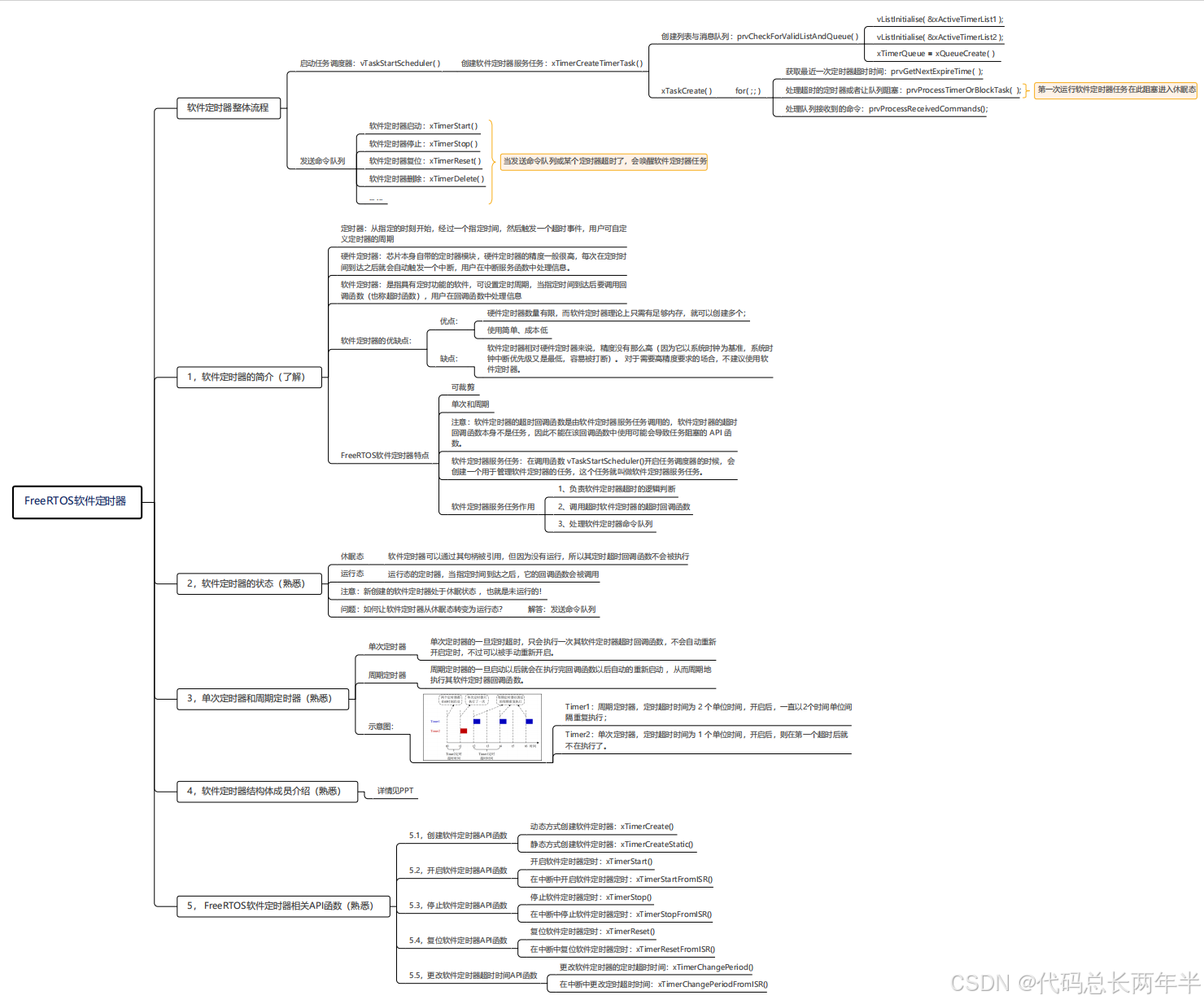
一、简介
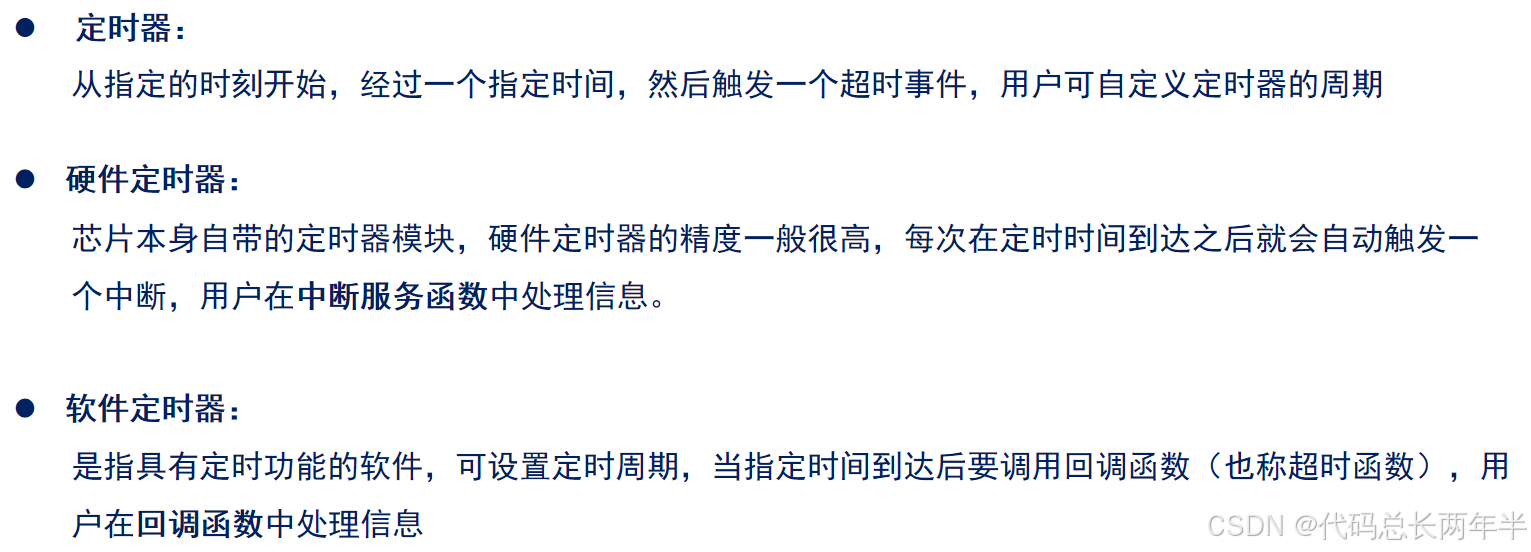
1、定时器先容
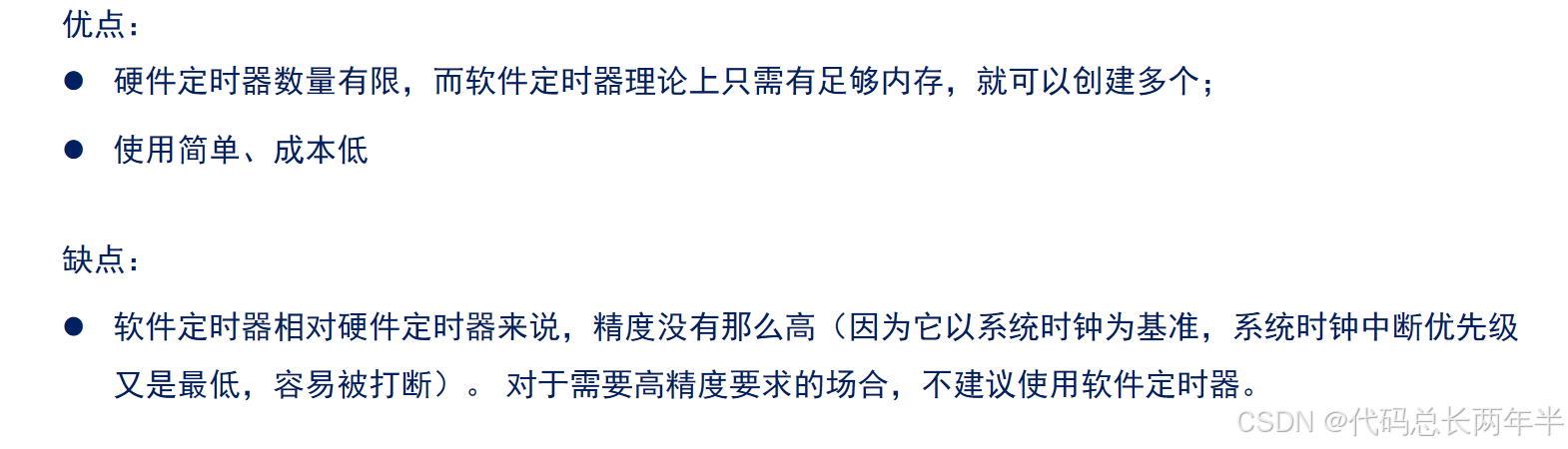
2、软件定时器优缺点
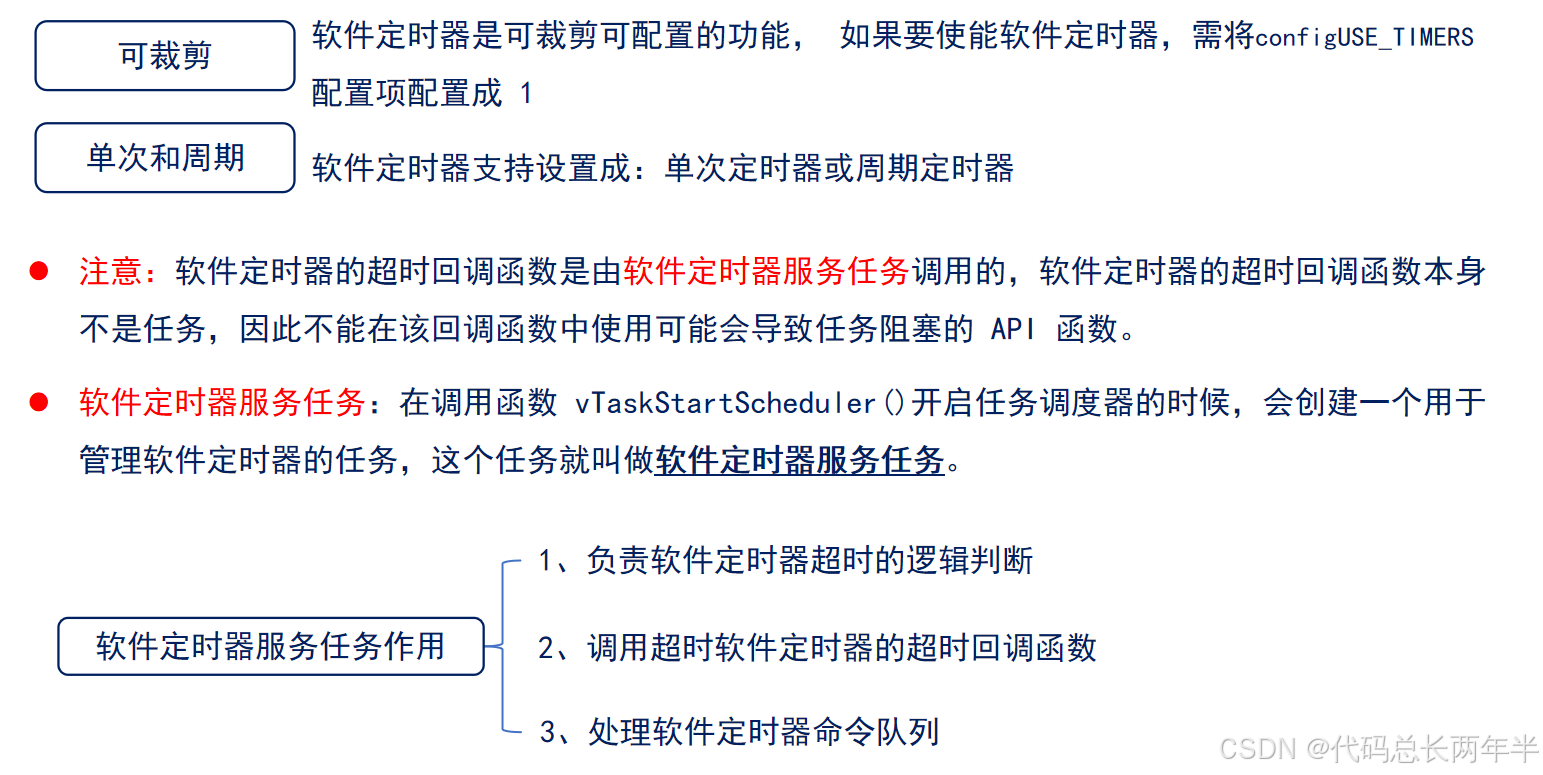
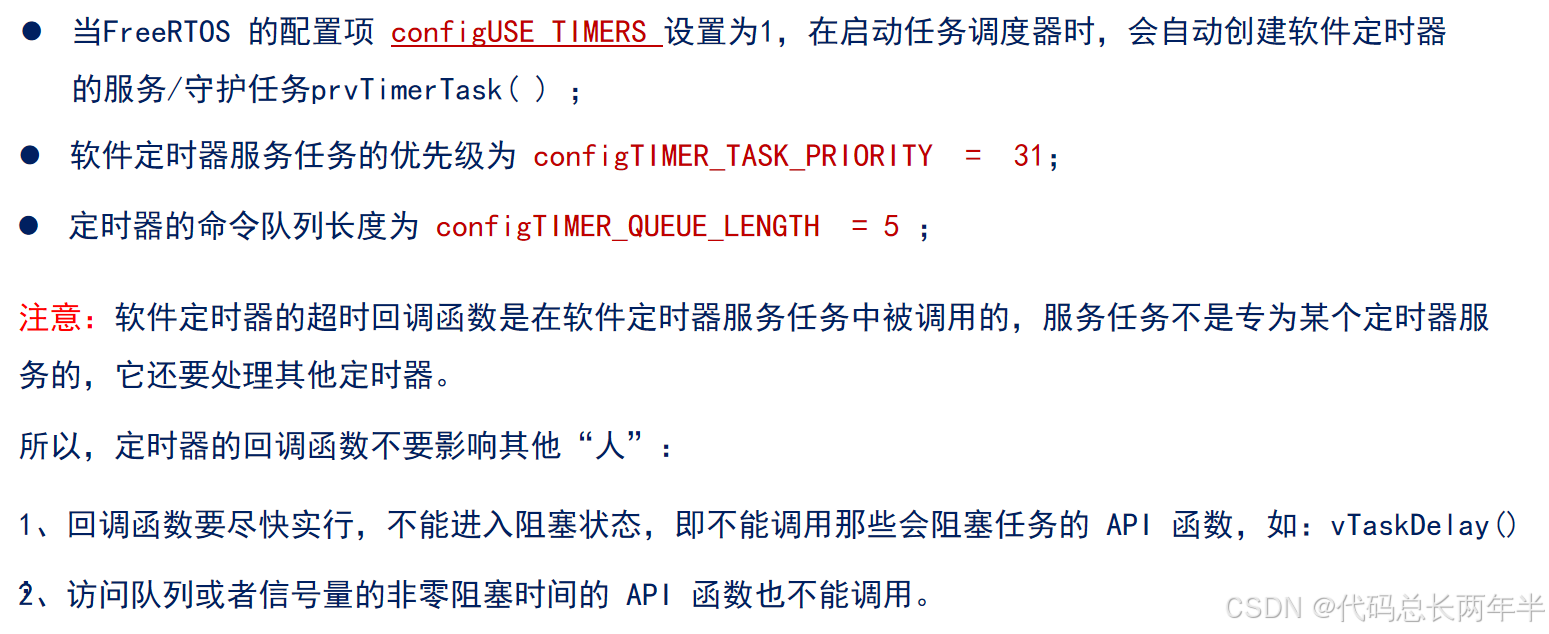
3、FreeRTOS定时器特点
4、软件定时器相干设置
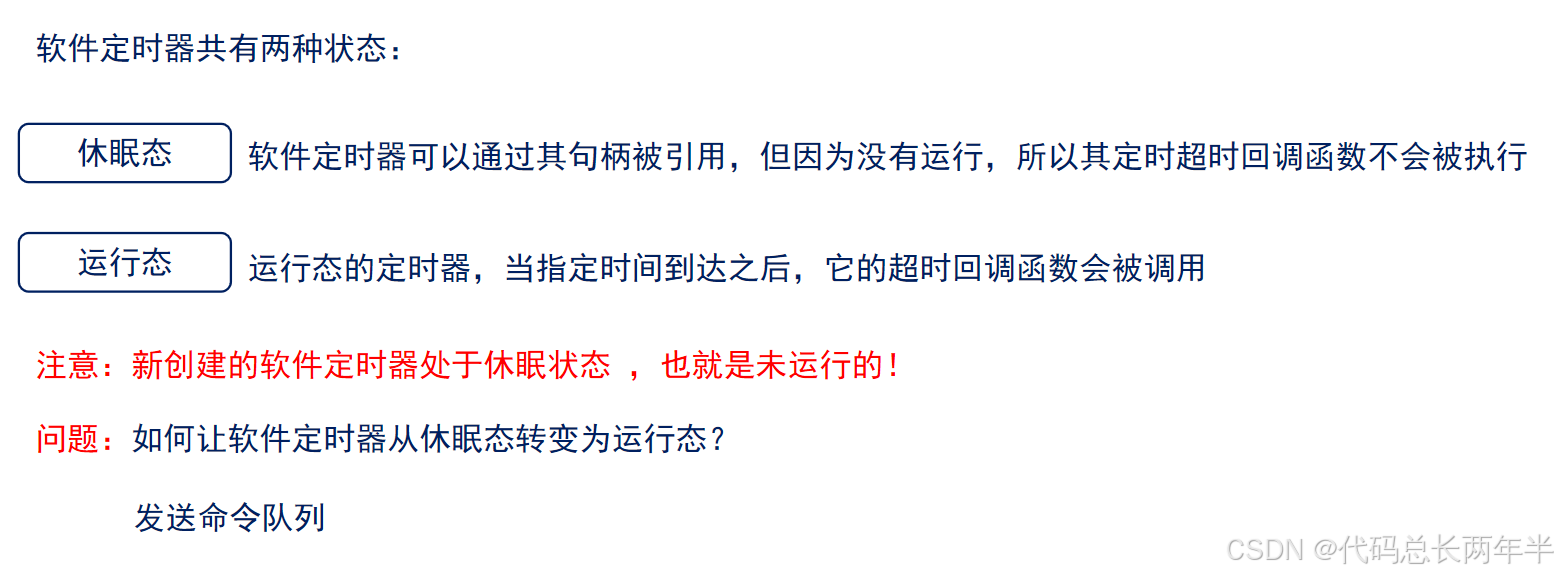
5、软件定时器的状态
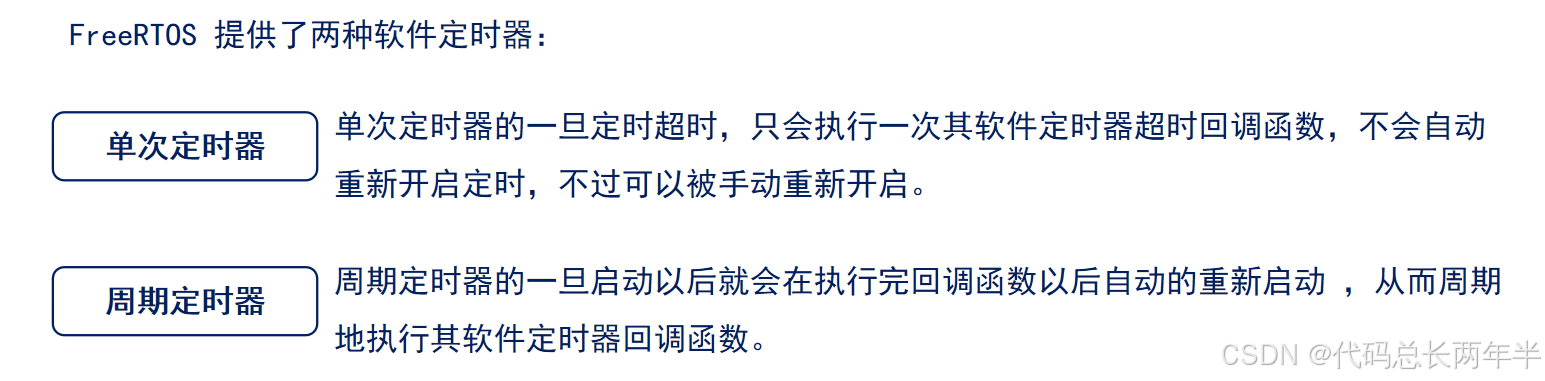
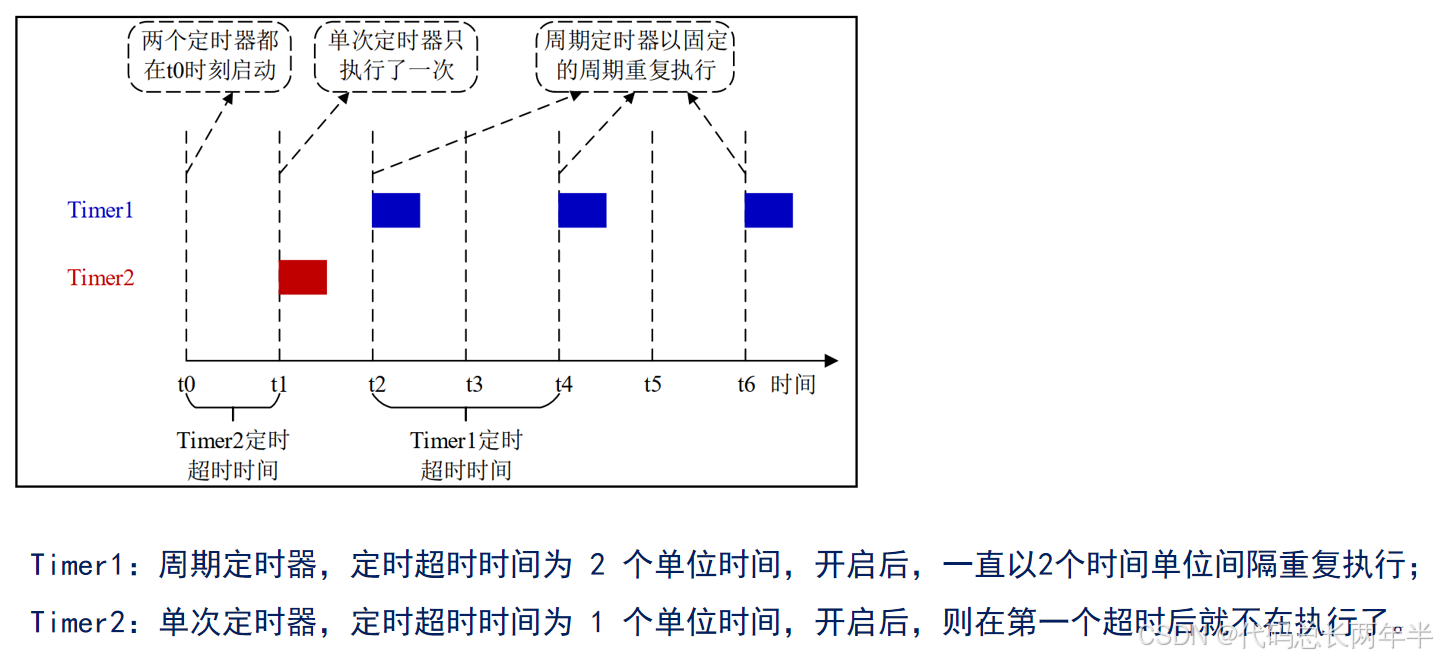
6、单次定时器和周期定时器
1、举例
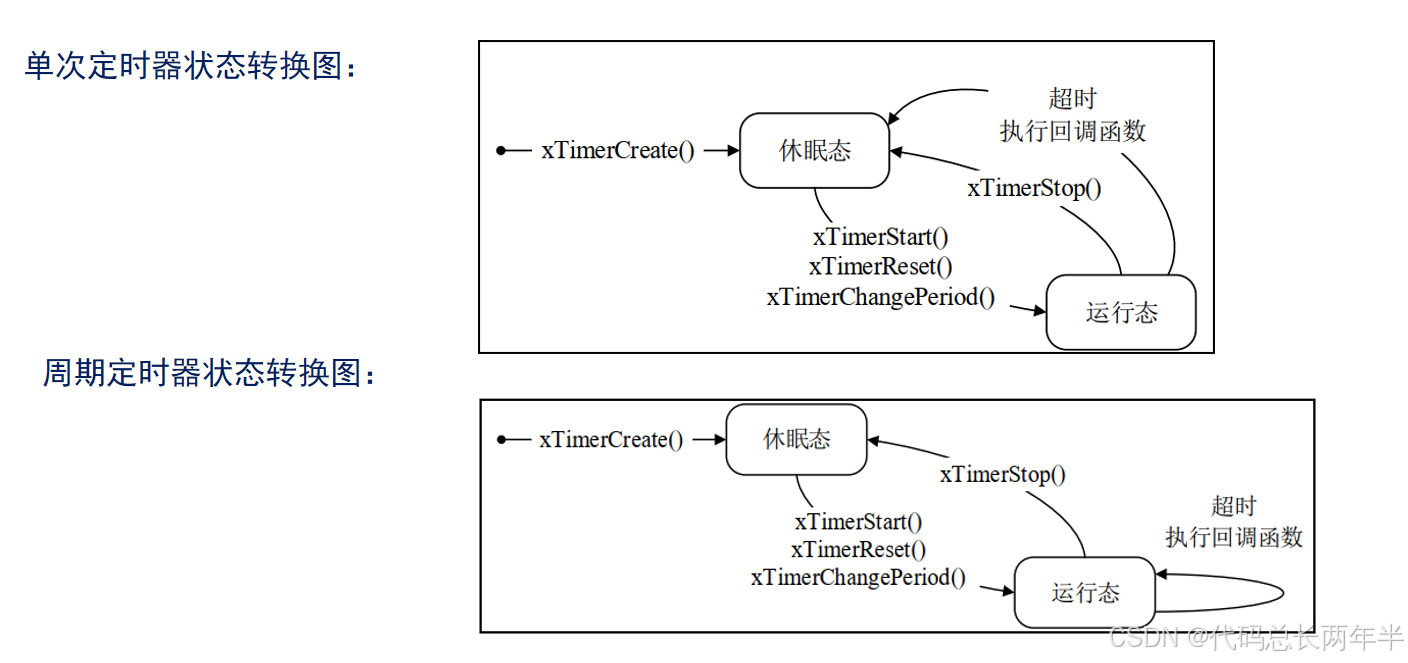
2、软件定时器状态转换图
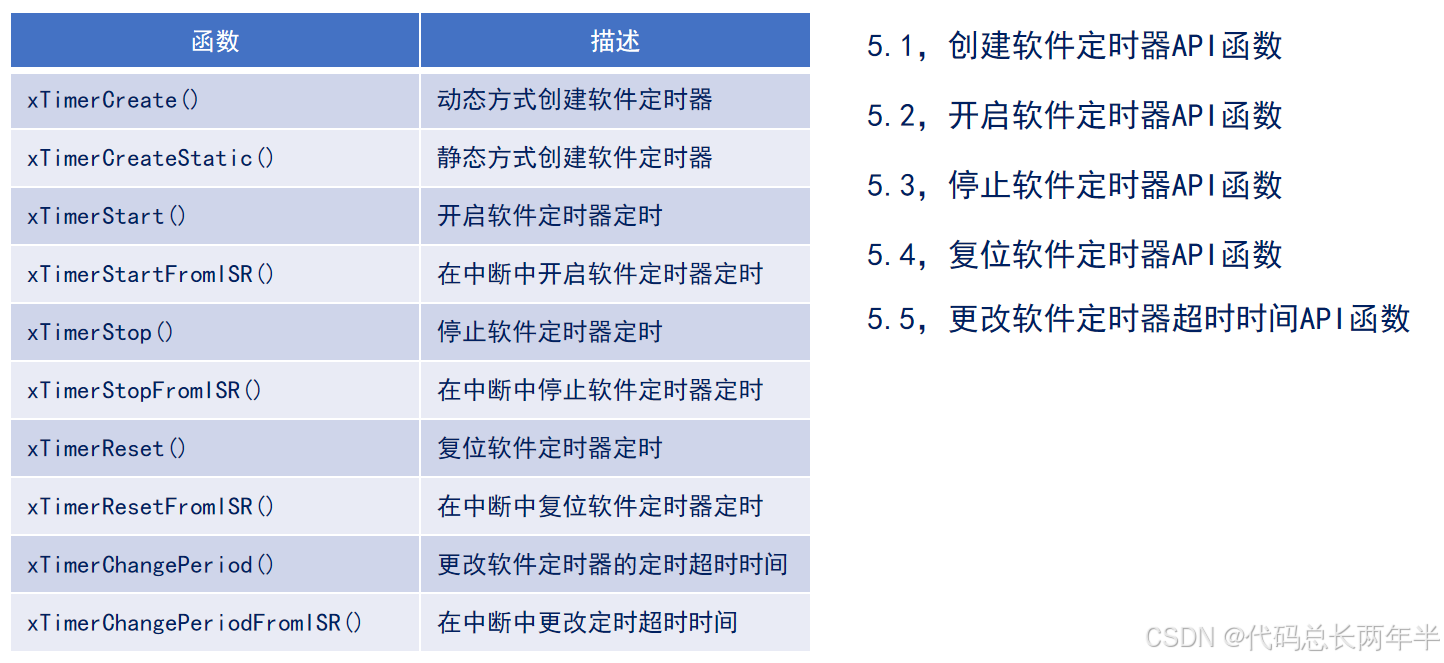
二、 FreeRTOS软件定时器相干API函数
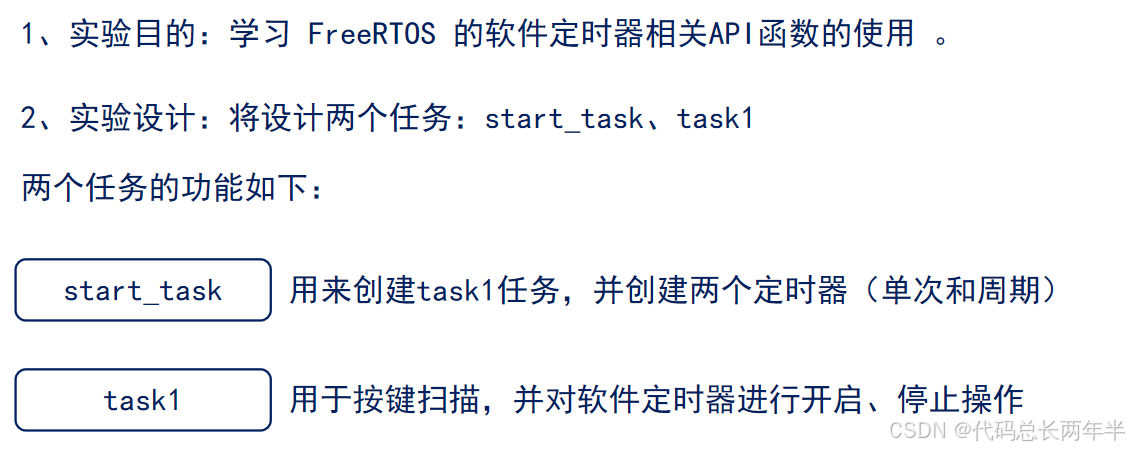
三、实行
1、代码
main.c - #include "stm32f10x.h"
- #include "FreeRTOS.h"
- #include "task.h"
- #include "freertos_demo.h"
- #include "Delay.h"
- #include "sys.h"
- #include "usart.h"
- #include "LED.h"
- #include "Key.h"
-
- int main(void)
- {
-
- NVIC_PriorityGroupConfig(NVIC_PriorityGroup_4);//设置系统中断优先级分组 4
- uart_init(115200);
- delay_init();
- Key_Init();
- LED_Init();
-
- // 创建任务
- FrrrRTOS_Demo();
-
- }
- #include "FreeRTOS.h"
- #include "task.h"
- #include "queue.h"
- #include "semphr.h"
- #include "event_groups.h"
- #include "LED.h"
- #include "Key.h"
- #include "usart.h"
- #include "delay.h"
- void Timer1Callback( TimerHandle_t pxTimer );
- void Timer2Callback( TimerHandle_t pxTimer );
- /******************************************************************任务配置****************************************************/
- //任务优先级
- #define START_TASK_PRIO 1
- //任务堆栈大小
- #define START_TASK_STACK_SIZE 128
- //任务句柄
- TaskHandle_t StartTask_Handler;
- //任务函数
- void start_task(void *pvParameters);
- //任务优先级
- #define TASK1_PRIO 2
- //任务堆栈大小
- #define TASK1_STACK_SIZE 128
- //任务句柄
- TaskHandle_t Task1_Handler;
- //任务函数
- void task1(void *pvParameters);
-
- //任务优先级
- /******************************************************************任务函数****************************************************/
- TimerHandle_t Timer1_handle = 0; //单次定时器
- TimerHandle_t Timer2_handle = 0; //周期定时器
- void FrrrRTOS_Demo(void)
- {
- //创建开始任务
- xTaskCreate((TaskFunction_t )start_task, //任务函数
- ( char* )"start_task", //任务名称
- (uint16_t )START_TASK_STACK_SIZE, //任务堆栈大小
- (void* )NULL, //传递给任务函数的参数
- (UBaseType_t )START_TASK_PRIO, //任务优先级
- (TaskHandle_t* )&StartTask_Handler); //任务句柄
- // 启动任务调度
- vTaskStartScheduler();
-
- }
- void start_task(void *pvParameters)
- {
- taskENTER_CRITICAL(); //进入临界区
-
-
- /**创建单次定时器**/
-
- Timer1_handle = xTimerCreate( "timer1", 1000,pdFALSE,(void *)1,Timer1Callback);
-
- /**创建周期定时器**/
- Timer2_handle = xTimerCreate( "timer2", 1000,pdTRUE,(void *)1,Timer2Callback);
-
-
- //创建1任务
- xTaskCreate((TaskFunction_t )task1,
- (const char* )"task1",
- (uint16_t )TASK1_STACK_SIZE,
- (void* )NULL,
- (UBaseType_t )TASK1_PRIO,
- (TaskHandle_t* )&Task1_Handler);
-
-
- vTaskDelete(NULL); //删除开始任务
- taskEXIT_CRITICAL(); //退出临界区
- }
- //1按键扫描并控制任务定时器
- void task1(void *pvParameters)
- {
- uint8_t key = 0;
-
- while(1)
- {
- key = Key_GetNum();
- if(key ==2)
- {
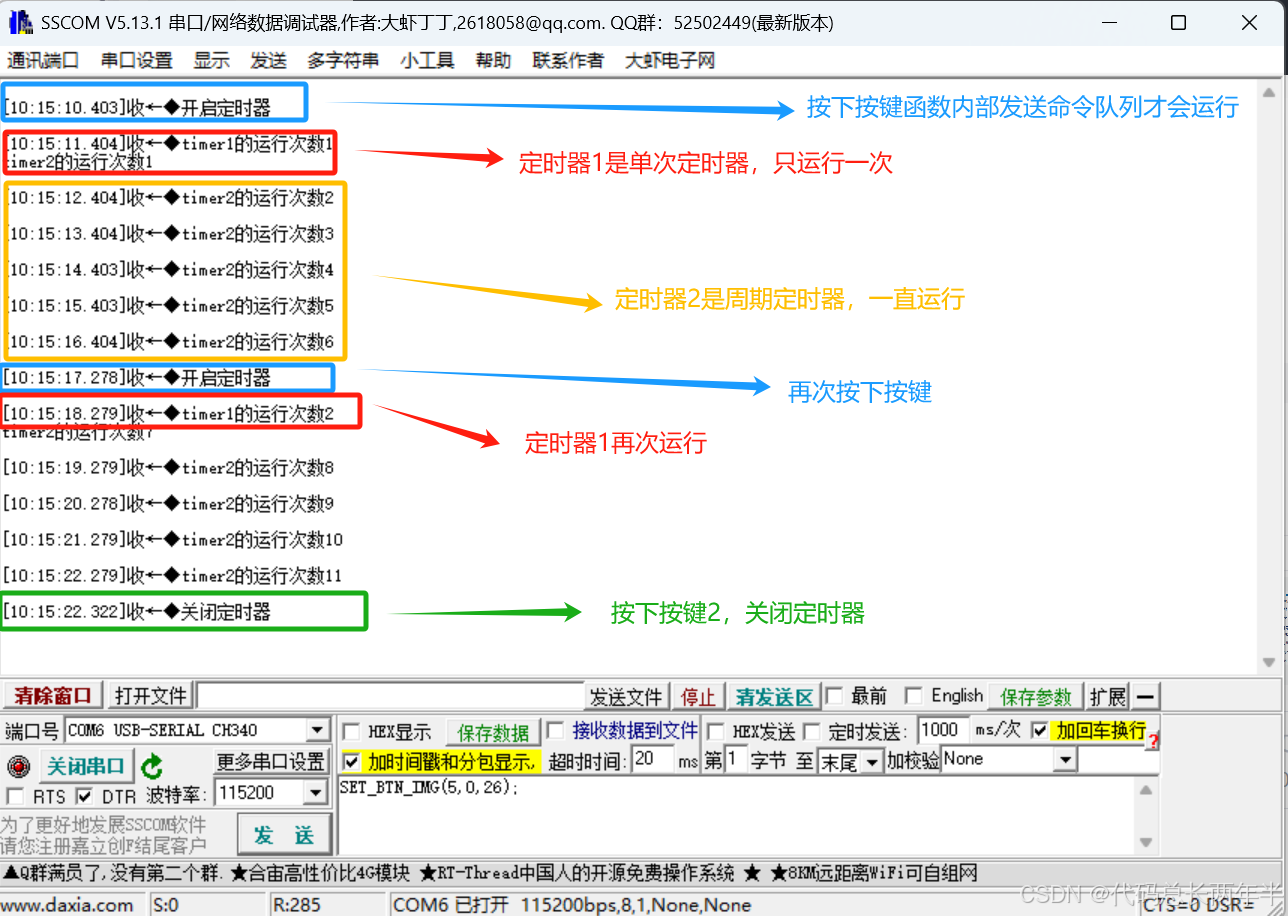
- printf("开启定时器\r\n");
- xTimerStart(Timer1_handle,portMAX_DELAY);
- xTimerStart(Timer2_handle,portMAX_DELAY);
- }else if(key ==3){
- printf("关闭定时器\r\n");
- xTimerStop(Timer1_handle,portMAX_DELAY);
- xTimerStop(Timer2_handle,portMAX_DELAY);
-
- }
- vTaskDelay(10);
- }
- }
- //timer1超时回调函数
- void Timer1Callback( TimerHandle_t pxTimer )
- {
- static uint32_t timer = 0;
- printf("timer1的运行次数%d\r\n",++timer);
- }
- //timer2超时回调函数
- void Timer2Callback( TimerHandle_t pxTimer )
- {
- static uint32_t timer = 0;
- printf("timer2的运行次数%d\r\n",++timer);
- }
- #include "stm32f10x.h" // Device header
- #include "FreeRTOS.h"
- #include "task.h"
- #include "usart.h"
- #include "Delay.h"
-
- /**
- * 函 数:按键初始化
- * 参 数:无
- * 返 回 值:无
- * 按键:PB4/PB12/PB14
- */
- void Key_Init(void)
- {
- GPIO_InitTypeDef GPIO_InitStructure;
-
- /*开启时钟*/
- RCC_APB2PeriphClockCmd(RCC_APB2Periph_GPIOB, ENABLE); //开启GPIOB的时钟
-
- /*GPIO初始化*/
- GPIO_InitStructure.GPIO_Mode = GPIO_Mode_IPU;
- GPIO_InitStructure.GPIO_Pin = GPIO_Pin_4 | GPIO_Pin_12 | GPIO_Pin_14;
- GPIO_InitStructure.GPIO_Speed = GPIO_Speed_50MHz;
- GPIO_Init(GPIOB, &GPIO_InitStructure);
- }
-
-
- /**
- * 函 数:按键获取键码
- * 参 数:无
- * 返 回 值:按下按键的键码值,范围:0~3,返回0代表没有按键按下
- * 注意事项:此函数是阻塞式操作,当按键按住不放时,函数会卡住,直到按键松手
- */
- uint8_t Key_GetNum(void)
- {
- uint8_t KeyNum = 0; //定义变量,默认键码值为0
-
- if (GPIO_ReadInputDataBit(GPIOB, GPIO_Pin_4) == 0) //读PB4输入寄存器的状态,如果为0,则代表按键1按下
- {
- KeyNum= GPIO_ReadInputDataBit(GPIOB, GPIO_Pin_4);
- delay_xms(20); //延时消抖
- while (GPIO_ReadInputDataBit(GPIOB, GPIO_Pin_4) == 0); //等待按键松手
- delay_xms(20); //延时消抖
- KeyNum = 1; //置键码为1
- }
-
- if (GPIO_ReadInputDataBit(GPIOB, GPIO_Pin_12) == 0)
- {
- KeyNum= GPIO_ReadInputDataBit(GPIOB, GPIO_Pin_12);
- delay_xms(20);
- while (GPIO_ReadInputDataBit(GPIOB, GPIO_Pin_12) == 0);
- delay_xms(20);
- KeyNum = 2;
- }
-
- if (GPIO_ReadInputDataBit(GPIOB, GPIO_Pin_14) == 0)
- {
- KeyNum= GPIO_ReadInputDataBit(GPIOB, GPIO_Pin_14);
- delay_xms(20);
- while (GPIO_ReadInputDataBit(GPIOB, GPIO_Pin_14) == 0);
- delay_xms(20);
- KeyNum = 3;
- }
-
- return KeyNum; //返回键码值,如果没有按键按下,所有if都不成立,则键码为默认值0
- }
-
-
-
-
四、重点
利用函数前,须要先将宏置1(默认是1)
#define configUSE_TIMERS 1
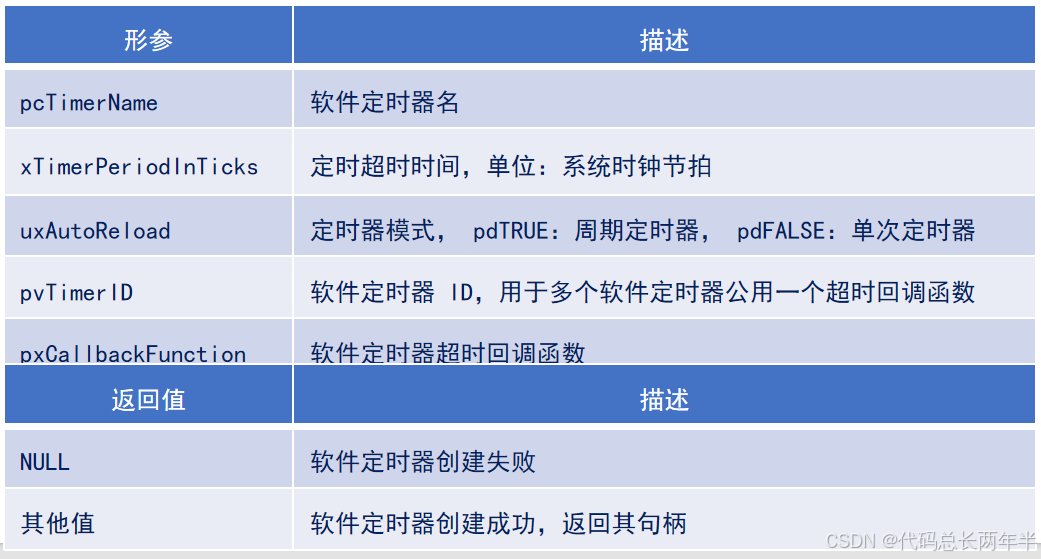
创建软件定时函数:
TimerHandle_t xTimerCreate( const char * const pcTimerName, const TickType_t xTimerPeriodInTicks, const UBaseType_t uxAutoReload,
void * const pvTimerID, TimerCallbackFunction_t pxCallbackFunction );
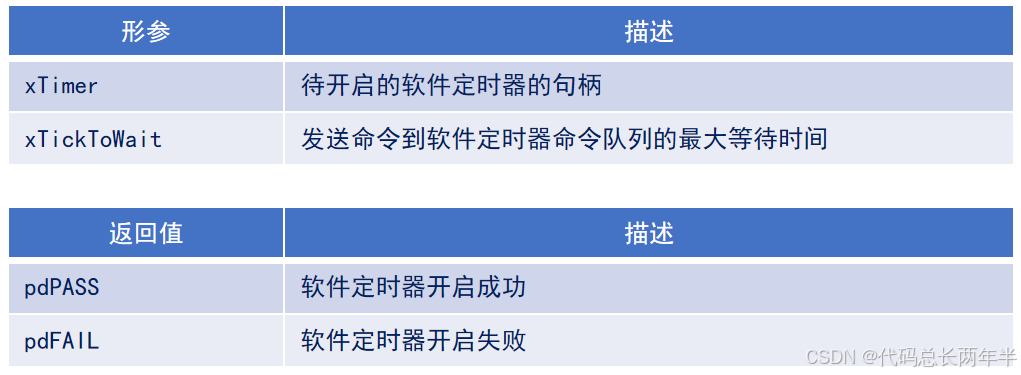
开启软件定时器函数:
BaseType_t xTimerStart( TimerHandle_t xTimer,
const TickType_t xTicksToWait );
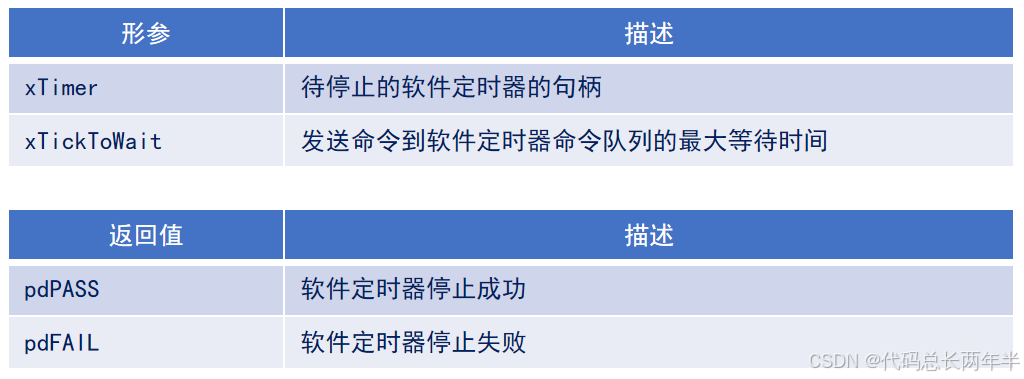
制止软件定时器函数:
BaseType_t xTimerStop( TimerHandle_t xTimer,
const TickType_t xTicksToWait);
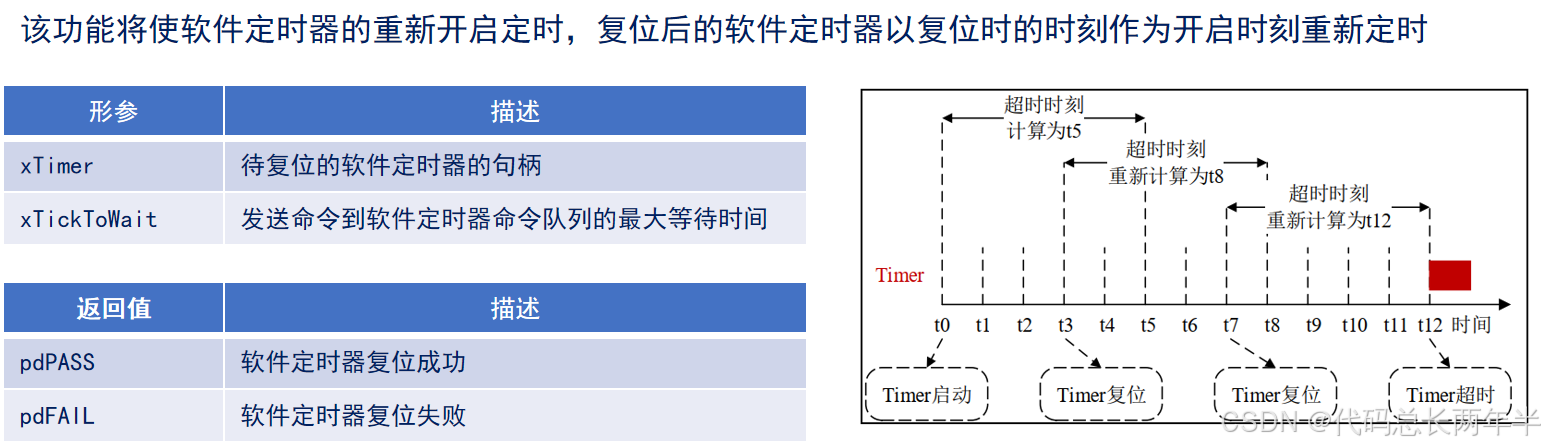
复位软件定时器函数:
BaseType_t xTimerReset( TimerHandle_t xTimer,
const TickType_t xTicksToWait);
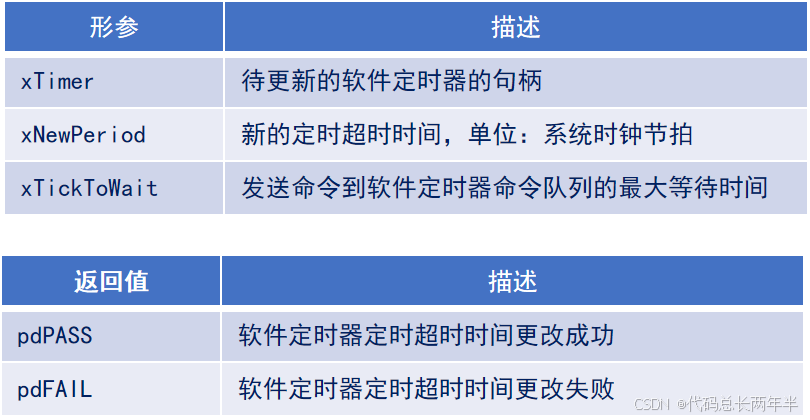
更改软件定时器超时时间API函数 :
BaseType_t xTimerChangePeriod( TimerHandle_t xTimer,
const TickType_t xNewPeriod, const TickType_t xTicksToWait);
免责声明:如果侵犯了您的权益,请联系站长,我们会及时删除侵权内容,谢谢合作!更多信息从访问主页:qidao123.com:ToB企服之家,中国第一个企服评测及商务社交产业平台。 |







 发表于 2025-10-12 08:01:05